Wireless remote
The 2009 method — a button on a radio remote. Tactile, instant, and reliable.
We developed every part of the project ourselves: a patented method, a family of camera triggers, creative software, and a fully owned stack that adapts to any space and feeds a living archive of millions of portraits.

A two-way mirror, a camera, and the remote in your hand. A face-to-face connection system facilitating a unique kind of visual vulnerability.
It began in 2009 as a framed mirror, lumber, black fabric, and a wired remote. The apparatus has changed; the principle hasn't.
A two-way mirror, a camera, and a cabinet containing our proprietary tech. Scroll to move around the whole unit.
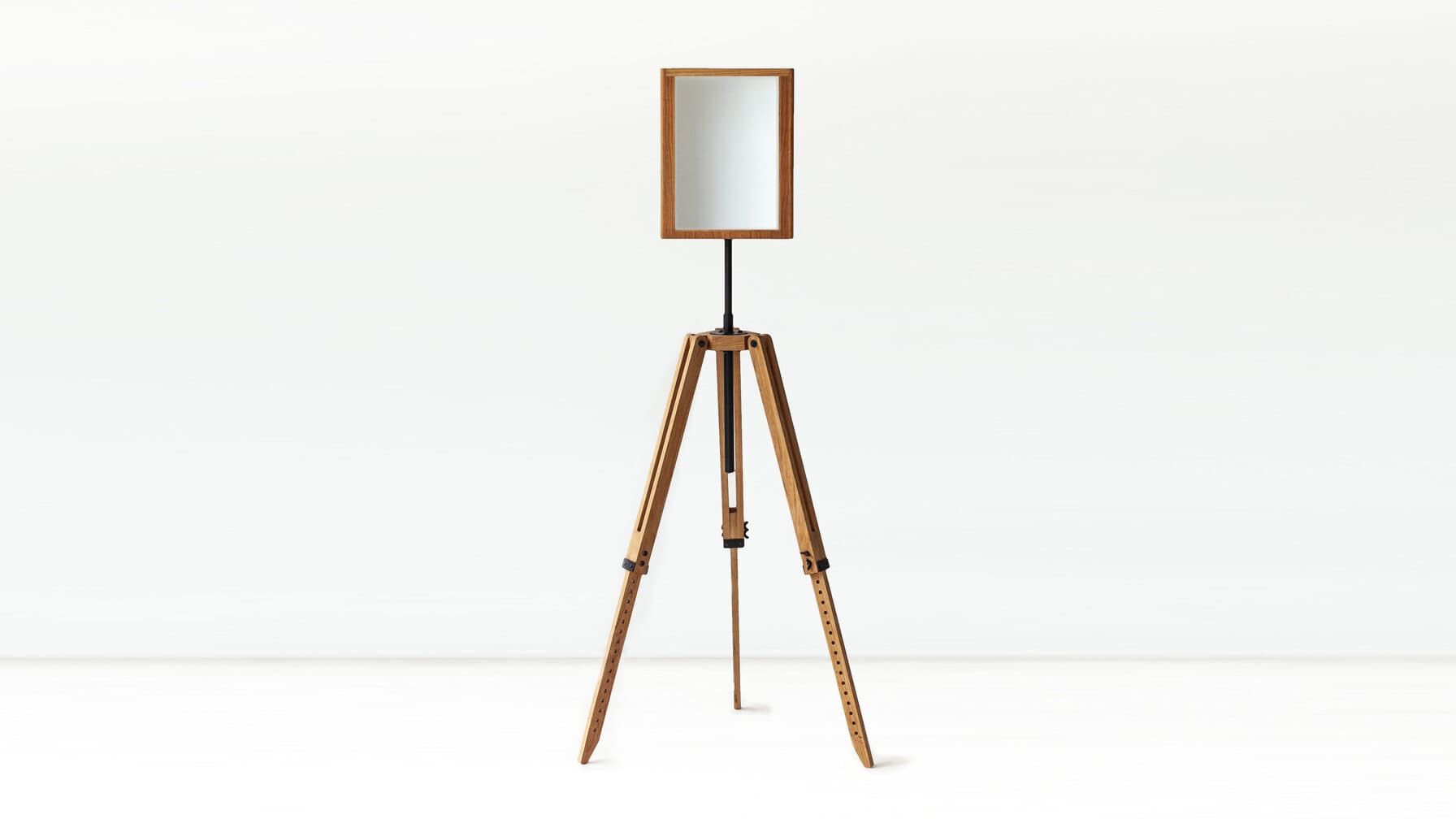
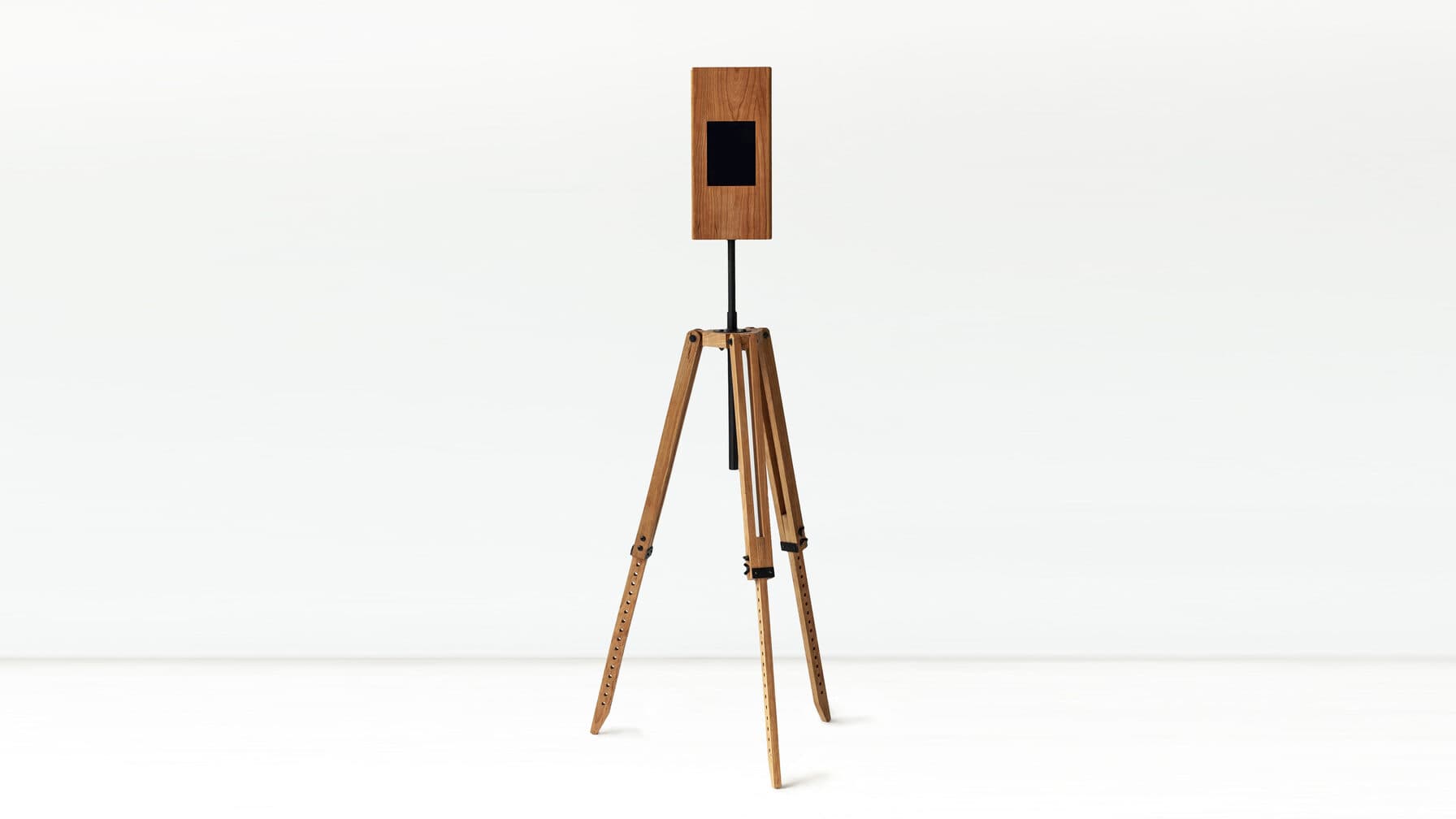
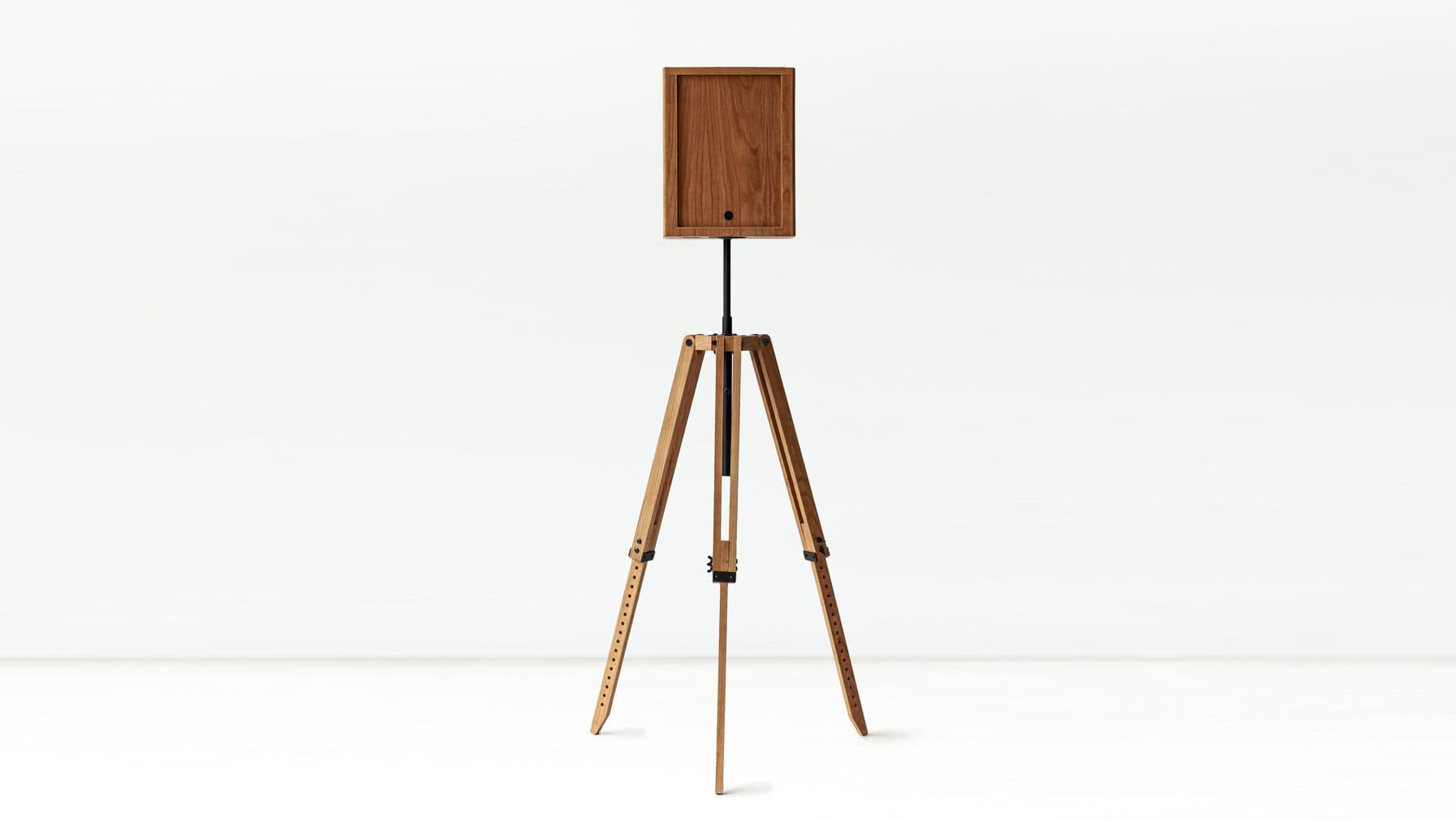
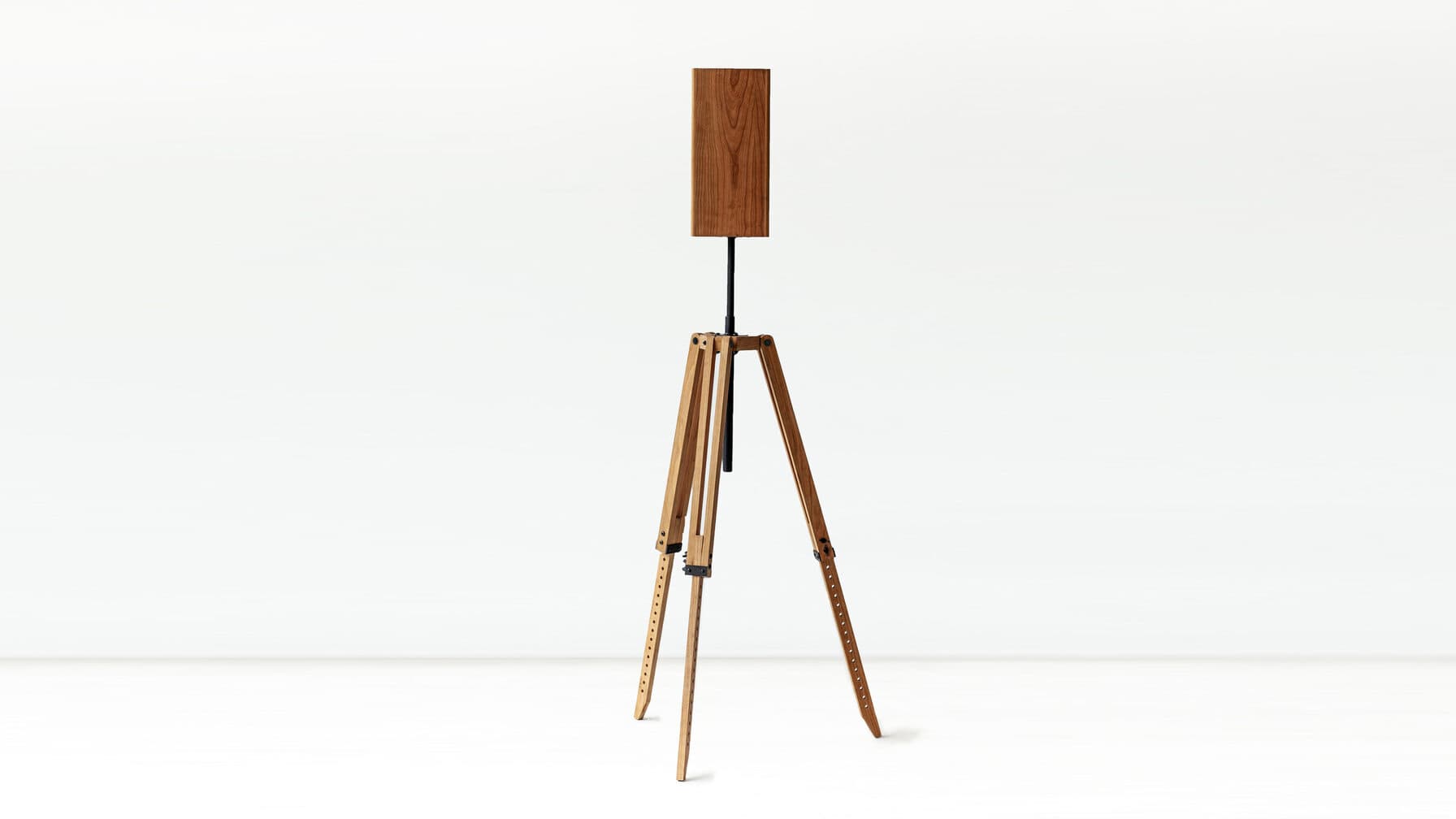
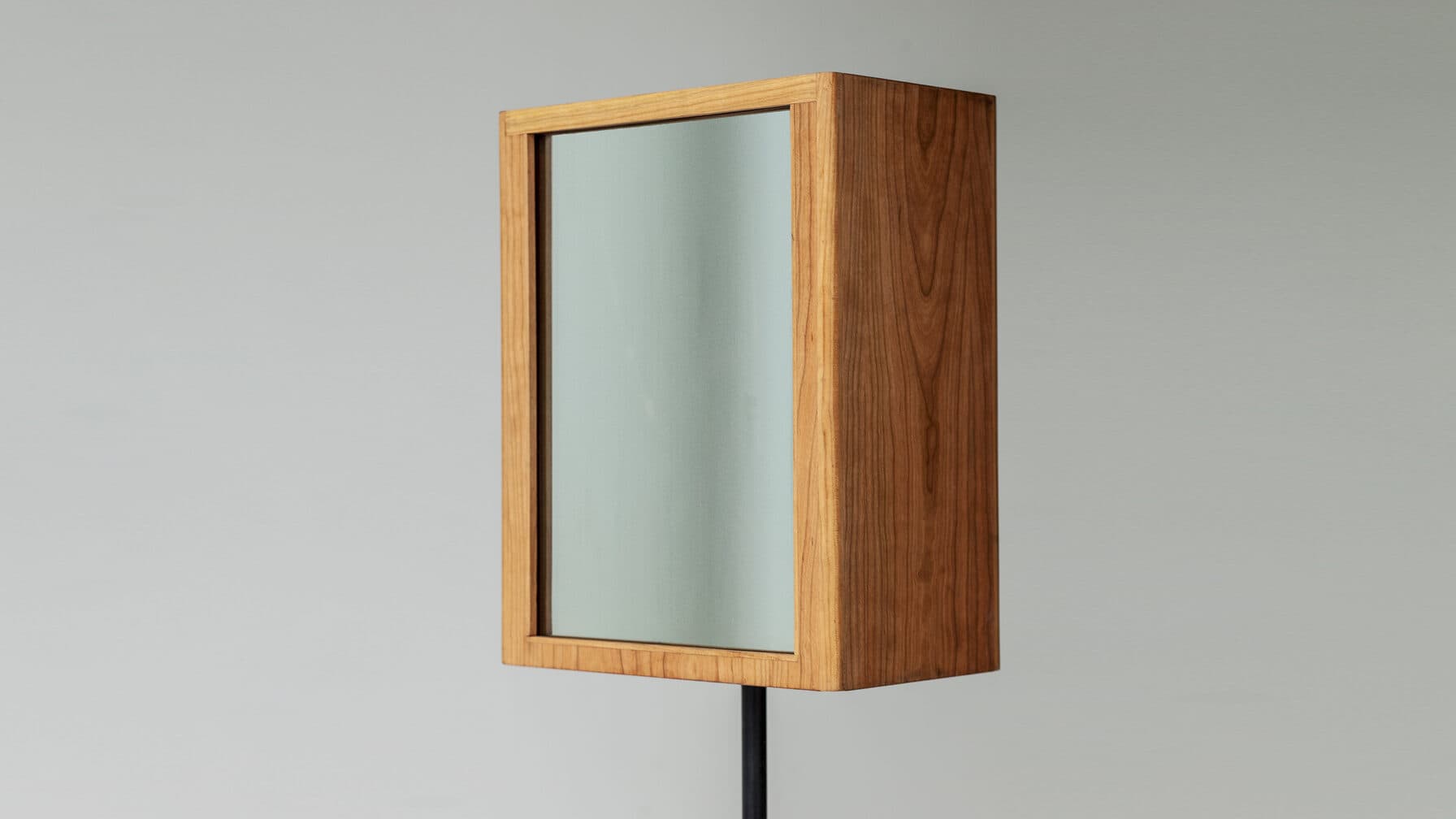
See yourself reflected.
Photographing through the transparent side unseen.
Agency over how and when you snap the picture.
Looking into your own eyes — a face-to-face connection system.
The release is the moment of authorship, so we've built a family of them. The same camera-behind-glass core accepts any trigger the room calls for — from a phone in your pocket to an arcade gun bolted to a cabinet.
The 2009 method — a button on a radio remote. Tactile, instant, and reliable.
Scan a code and your own phone becomes the shutter — with photos emerging directly on it.
We rewired a Big Buck Hunter cabinet so the toy gun triggers the camera at will.
As easy as stepping on a button. Simple, intuitive, and great for most events.
Because we own the software, the portrait doesn't end at capture — it becomes something the participant and our system make together. These are just a few of the tools we've built — a sample of how versatile the system is, each one a different way to co-author the image on the participant's terms. Demos and outcomes live on Experience; here are three of them.
Participants draw, sign, or annotate on top of their images using a tablet; the strokes composite onto the portrait before export — a photograph finished by hand.
Two frames blended into one: a second self. Blend modes and masking run in software, so there's no darkroom and no waiting.
The subject is segmented from the rest of the photo in real time and dropped onto customizable AI-generated or rotating backdrops. Developed for Art Basel.
Hardware, software, UX, and delivery are all ours — which is why the system adapts to any room and every contributed portrait lands in the same archive. Four layers, one pipeline.
A professional camera behind the two-way mirror, fired by the participant's own trigger — studio-grade capture that's genuinely self-authored.
Capture, compositing, and the archive all run on software we wrote ourselves, so the whole pipeline bends to the work.
Every frame is processed in the moment: composited, corrected, and rendered into whatever format the delivery calls for.
Instant digital to the participant plus a print in hand on-site where available — the portrait is theirs before they leave the room.
Every capture is stored and its metadata indexed; the participant decides whether it becomes public. The technology isn't the point — it's the infrastructure of memory. Two million portraits and counting, growing by a thousand on a peak day.
The full account of the method, the stack, the regenerative operating model, and the living archive. SPP Technical Concept Paper, 2026 · v1.2.
We license the technology and build custom apparatus for partners. Tell us what you're imagining.
hello@selfportraitproject.com · +1 917.714.3492